Metal buildings are widely used across Canada for garages, barns, warehouses, and industrial facilities. However,...
Read more
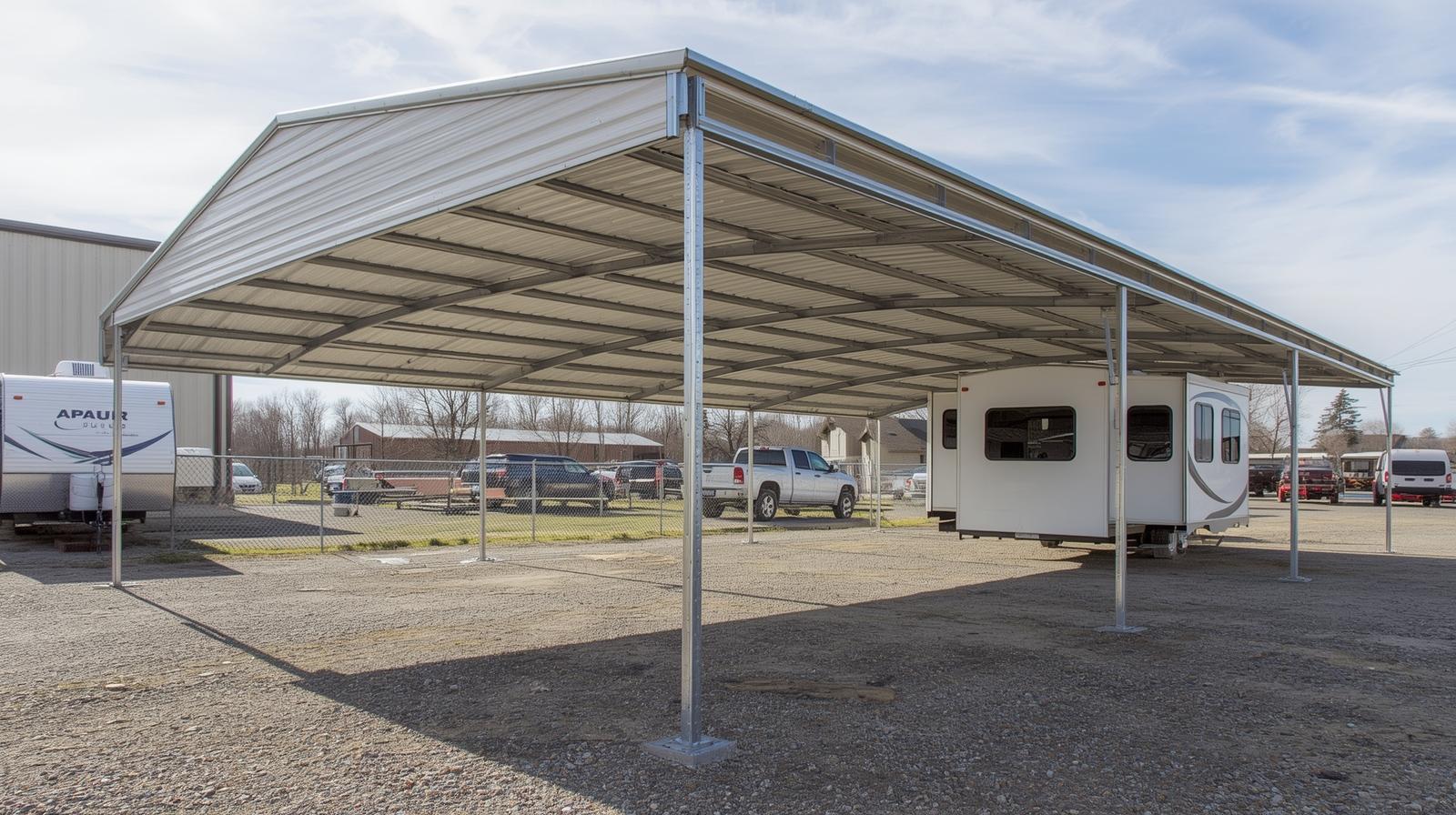
Installing a carport is one of the most practical ways to protect your vehicles, tools, or equipment from harsh weather — but your structure is only as strong as its foundation.
Whether you live in an area prone to high winds, heavy rain, or shifting soil, properly securing your carport to the ground ensures it stays safe, stable, and long-lasting.
In this article, we’ll walk you through the best methods to secure your carport to the ground, along with expert tips for different surface types — from concrete to gravel.
Before diving into methods, it’s important to understand why anchoring your carport is essential:
Safety: Prevents the carport from shifting or collapsing during strong winds or storms.
Durability: Reduces stress on joints and frames, extending the life of the structure.
Compliance: Many local building codes require carports to be securely anchored to meet safety standards.
Simply put — good anchoring keeps your investment protected and your property safe.
If your carport is being installed over a concrete surface, using concrete wedge anchors or expansion bolts is one of the most effective methods.
How it works:
Drill holes into the concrete slab that align with the base rails of your carport.
Insert heavy-duty wedge anchors through the frame base into the holes.
Tighten each anchor to ensure a firm grip.
Expert Tip:
Use stainless steel or galvanized anchors to prevent rust and corrosion over time.
Best for: Permanent carports and windy regions.
Anchoring a carport on gravel requires a bit more stability since gravel can shift easily. The most effective solution is using mobile home anchors (also known as auger anchors).
How it works:
Screw auger anchors deep into the compacted gravel base.
Attach the anchor heads to the carport’s base rail using metal straps or U-bolts.
Tighten securely to prevent any lateral movement.
Expert Tip:
Ensure the gravel is well-compacted before anchoring — a loose surface will compromise stability.
Best for: Semi-permanent installations or carports in moderate wind zones.
When installing on bare ground or soil, earth auger anchors are the go-to solution. These screw-like anchors dig deep into the ground, offering excellent resistance against uplift.
How it works:
Insert the auger anchor into the soil using a wrench or power drill.
Connect the anchor to the base frame with a tension strap or cable.
Tighten until the structure is stable.
Expert Tip:
For soft or loose soil, consider pouring small concrete footings beneath each leg before anchoring for added stability.
Best for: Rural areas and budget-friendly installations.
Anchoring on asphalt requires a slightly different approach due to the surface’s softer nature. The most reliable option is asphalt anchors or rebar spikes.
How it works:
Drill pilot holes into the asphalt where the carport’s base rails will sit.
Insert specialized asphalt anchors or long rebar spikes through the frame.
Seal around each hole to prevent moisture infiltration.
Expert Tip:
Avoid over-tightening — asphalt expands and contracts with temperature, so leave slight flexibility.
Best for: Driveway installations and urban settings.
Regardless of the surface type, these general tips can improve your carport’s strength and lifespan:
Always level your surface before installation.
Use professional-grade anchors suited for your climate.
Check and tighten anchor points annually.
Add side panels or braces for extra wind resistance in high-risk areas.
A carport is a long-term investment — and anchoring it correctly is the key to ensuring it lasts for years. The best methods to secure your carport to the ground depend on your surface type, weather conditions, and intended use.
From wedge anchors on concrete to auger anchors in soil, each option provides lasting stability when installed properly.
So before you park your vehicle under that new structure, make sure it’s firmly grounded — because a well-anchored carport isn’t just safer, it’s smarter.
Discover exciting categories. Find what you're looking for.