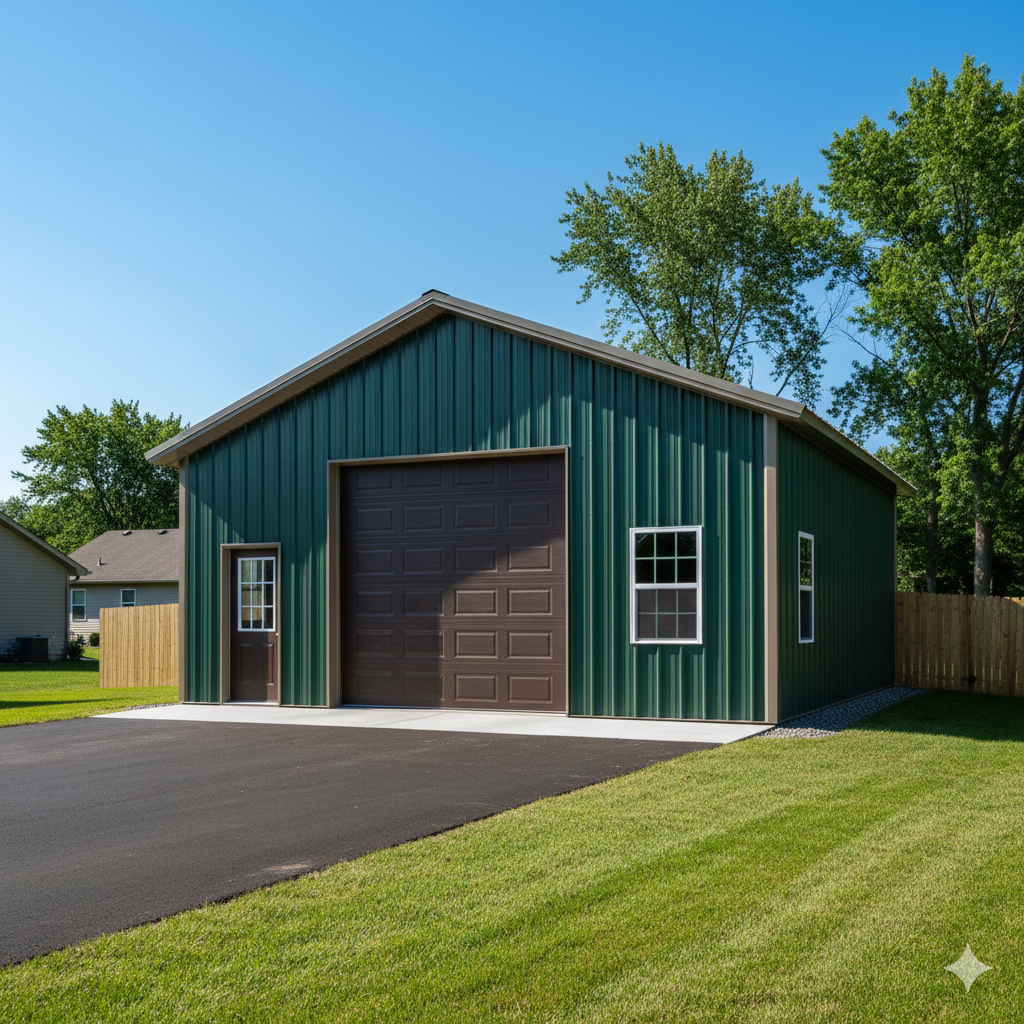
India’s logistics landscape is shifting rapidly, driven by e-commerce growth, improved connectivity, and rising demand...
Read more

India’s logistics landscape is shifting rapidly, driven by e-commerce growth, improved connectivity, and rising demand in Tier-2 and Tier-3 cities. As businesses expand beyond metros, logistics companies need infrastructure that can keep up—fast, flexible, and cost-efficient.
This is where metal warehouses come into the picture. More logistics providers are turning to prefabricated metal buildings as their primary warehousing solution due to their speed, durability, and scalability.
At Metal Building Connect, we have seen firsthand how metal warehouses are reshaping logistics expansion in emerging markets. Here’s how they help logistics companies scale faster in Tier-2 and Tier-3 cities.
Traditional concrete warehouses take months to build, involving multiple contractors, approvals, and weather limitations. In contrast, prefabricated metal warehouses can be installed in weeks, enabling logistics companies to launch operations faster.
This speed is crucial for:
New distribution centers
Last-mile delivery hubs
Regional stocking points
Cold storage or goods sorting units
Tier-2 and Tier-3 markets grow fast. Companies need facilities that grow just as quickly.
Cost efficiency is one of the biggest advantages of metal warehouses.
They reduce expenses through:
Minimal labor requirements
Prefabricated components
Faster timelines
Reduced material waste
Lower maintenance costs long term
This is especially beneficial for logistics companies expanding into multiple cities simultaneously. With metal buildings, scaling becomes financially feasible without compromising quality.
Logistics demand fluctuates constantly—especially in developing regions. Companies may need to expand storage, add loading bays, or adjust floor plans as requirements grow.
Metal warehouses offer unmatched flexibility by allowing:
Easy expansion of length or width
Simple addition of partitions
Installation of mezzanine floors
Custom openings for loading docks
Relocation if needed
This adaptability makes metal buildings ideal for dynamic logistics operations.
Tier-2 and Tier-3 cities often face diverse weather conditions—extreme heat, heavy rain, high humidity, and seasonal storms. Metal warehouses are designed to withstand these challenges.
Key benefits include:
Corrosion-resistant steel
High wind and snow load ratings
Leak-proof roofing
Strong structural framing
This ensures uninterrupted operations and protects stored goods.
Today’s logistics industry relies heavily on automation, including:
Conveyor systems
Robotic picking units
High-rise racking
Warehouse management systems (WMS)
Metal warehouses support these technologies with:
Clear span interiors (no columns blocking equipment)
High ceiling options
Heavy load-bearing capacity
Easy cable and electrical integration
This makes them future-ready for advanced logistics operations.
In many regions, metal buildings require fewer approvals than traditional RCC structures. With certified engineering and pre-approved designs, companies face fewer roadblocks when setting up new warehouses.
This reduces:
Administrative delays
Compliance hurdles
Architectural design time
Faster approvals mean faster go-live—essential for capturing demand in emerging markets.
Metal warehouses can be used for various logistics functions, including:
Sorting centers
Fulfillment hubs
Return processing areas
Cross-docking stations
Cold storage with insulation
Inventory overflow facilities
This versatility makes them a smart investment for companies planning long-term expansion.
With insulation, ventilated designs, and reflective roofing, metal warehouses reduce energy consumption and maintain better indoor climate control.
Benefits include:
Lower cooling costs
Improved comfort for workers
Reduced equipment wear
Better moisture control
Lower operational expenses help logistics companies stay profitable even in high-growth, price-sensitive markets.
Because metal warehouses:
Install faster
Cost less
Last longer
Scale easily
They offer one of the highest returns on investment for logistics infrastructure.
This enables companies to:
Reach new markets quickly
Strengthen last-mile delivery networks
Reduce shipping times
Improve customer satisfaction
For logistics growth in Tier-2 and Tier-3 cities, metal buildings are not just an option—they are a competitive advantage.
Metal warehouses are transforming how logistics companies expand across India’s emerging cities. Their speed, affordability, durability, and scalability make them the perfect infrastructure choice for rapid growth.
At Metal Building Connect, we help logistics providers choose the right metal warehouse solutions tailored to their operational and regional needs.
Discover exciting categories. Find what you're looking for.