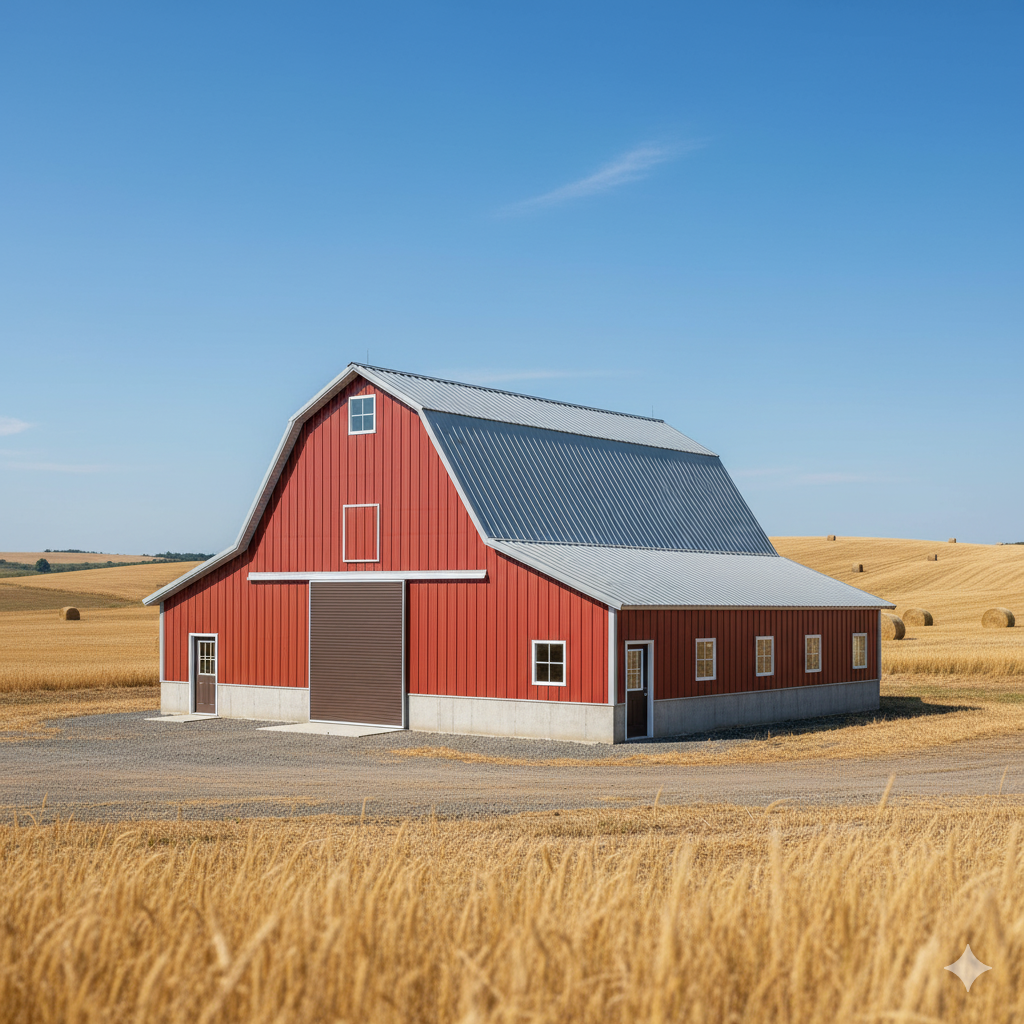
One of the biggest myths about metal buildings is that customization always leads to high...
Read more

One of the biggest myths about metal buildings is that customization always leads to high costs. In reality, metal buildings are among the most flexible and cost-efficient structures to customize—if the right choices are made early in the planning stage.
At Metal Building Connect, we regularly help buyers customize metal buildings while staying within budget. The key lies in understanding which upgrades add real value and which ones unnecessarily inflate costs.
This guide explains how you can customize metal buildings without increasing cost too much, while still achieving functionality, aesthetics, and long-term performance.
Metal buildings are designed using modular systems. This means components such as frames, panels, doors, and roof sections are manufactured in standardized formats.
Because of this:
Design changes don’t require complete re-engineering
Components are easy to swap or upgrade
Prefabrication reduces labor costs
Customization happens at the factory level, not on-site
This modular nature makes customization far more affordable compared to traditional construction.
Slight dimension changes often cost less than expected because steel frames are engineered to scale.
Best practices:
Increase height instead of expanding footprint
Choose standard width increments
Plan future expansion during initial design
These adjustments improve usability without significantly raising costs.
Roof style impacts both cost and performance.
Cost-efficient options include:
Vertical roofs for snow or heavy rain regions
Boxed-eave roofs for moderate climates
Choosing the correct roof upfront avoids expensive retrofits later.
Standard color options are usually included in base pricing.
To stay budget-friendly:
Choose manufacturer-standard colors
Avoid specialty finishes unless necessary
Use lighter colors for heat efficiency without added cost
Color customization doesn’t always mean premium pricing.
Customizing door placement is usually low-cost during the design phase.
Budget-friendly options:
Standard roll-up doors
Walk-in doors for accessibility
Pre-planned openings instead of post-installation cuts
Planning door placement early prevents expensive structural changes later.
Instead of enclosing all sides, many buyers opt for:
Two or three enclosed sides
End walls only
Side panels up to a certain height
This provides protection while keeping costs controlled.
While many upgrades are affordable, some can significantly impact cost if added later or without planning.
Examples include:
Non-standard building widths
Custom roof pitches
Specialty insulation systems
Heavy architectural facades
Retrofitting doors or windows after installation
These aren’t bad choices—but they must be planned upfront to stay cost-efficient.
The biggest cost-saving strategy is planning customization before manufacturing begins.
Early planning allows:
Factory-level adjustments
Optimized steel usage
Accurate engineering
Reduced on-site labor
No structural rework
Late-stage changes are always more expensive.
Buyers who stay within budget typically:
Choose standard design modules
Focus on functional upgrades
Avoid unnecessary architectural add-ons
Plan for future expansion
Work with experienced metal building providers
Metal Building Connect helps customers strike the right balance between customization and cost control.
Many customers customize metal buildings affordably by:
Increasing height for equipment clearance
Adding lean-to extensions later
Installing insulation only where needed
Using modular expansions instead of new buildings
Choosing structural upgrades over cosmetic ones
These strategies deliver value without excessive spending.
Yes—metal buildings can absolutely be customized without increasing cost too much. The key is choosing the right upgrades, planning early, and working within modular design standards.
Metal buildings offer flexibility that traditional construction simply cannot match. With smart decisions and expert guidance, you can create a building that fits your needs, performs well, and stays within budget.
At Metal Building Connect, we help customers design cost-effective, customized metal buildings that balance performance, aesthetics, and affordability.
Discover exciting categories. Find what you're looking for.