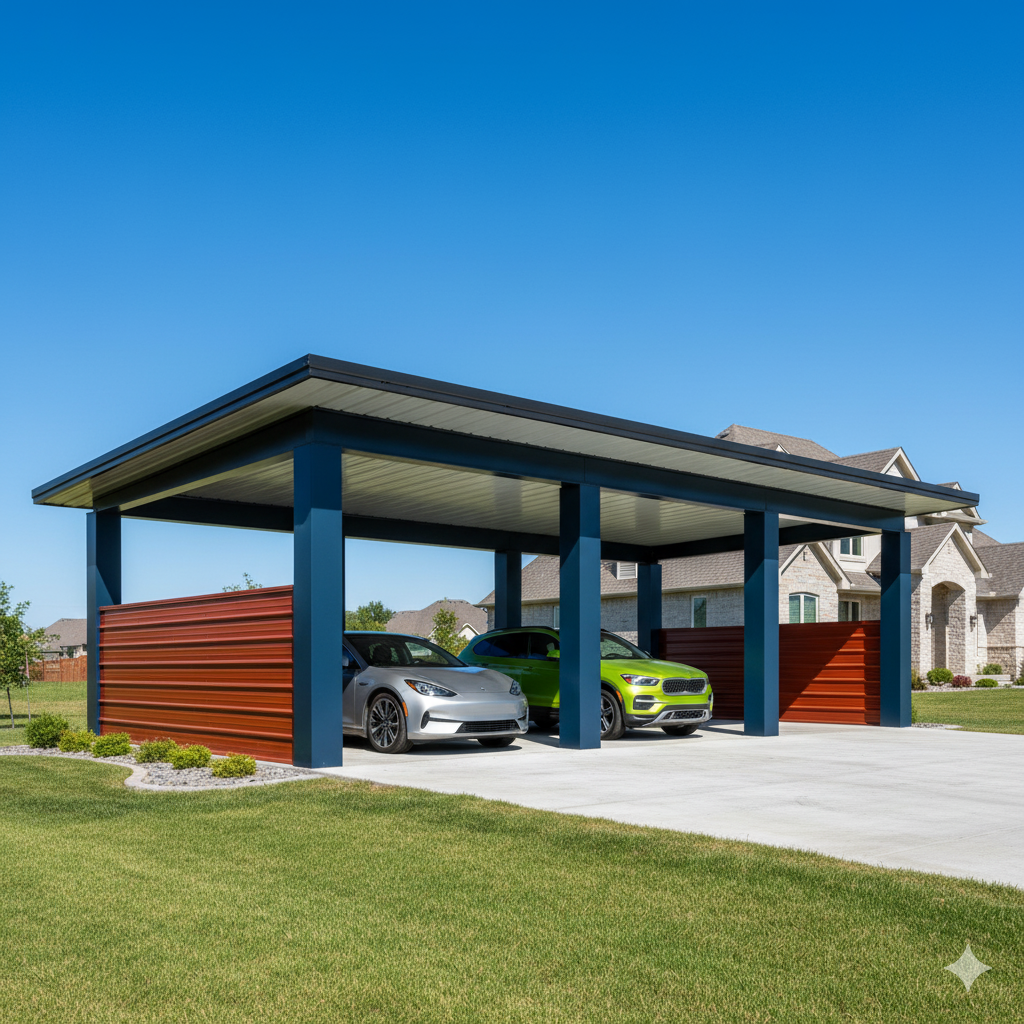
If you’ve ever researched metal buildings, you’ve likely come across two terms used almost interchangeably:...
Read more

With construction costs continuing to rise in 2026, homeowners and businesses are looking for smarter, more cost-effective garage solutions. One of the most common questions buyers ask is whether a metal garage is cheaper than a concrete garage, especially when considering long-term value and performance.
At Metal Building Connect, we help buyers evaluate both options based on real-world costs, timelines, and maintenance factors. This guide provides a clear comparison to help you decide which garage type makes more financial sense in 2026.
Metal garages are typically built using prefabricated steel components, which significantly reduces construction time and labor costs.
Key cost factors include:
Steel framing and panels
Prefabricated roof systems
Minimal on-site labor
Faster installation timelines
Lower foundation requirements
Because most components are manufactured off-site, metal garages benefit from predictable pricing and fewer construction delays.
Concrete garages rely heavily on on-site construction, which increases both labor and material costs.
Key cost drivers include:
Concrete, cement, and aggregate prices
Skilled labor availability
Longer construction timelines
Formwork and reinforcement requirements
Extended curing periods
Concrete garages often require more time, manpower, and coordination, increasing total project costs.
In most markets, metal garages are cheaper upfront than concrete garages.
Reasons include:
Lower material costs per square foot
Reduced labor expenses
Shorter project timelines
Less site preparation
Concrete garages generally cost more due to higher labor intensity and longer build durations.
Time directly affects cost in construction.
Installation can take days or weeks
Minimal weather dependency
Faster project completion reduces labor and rental costs
Construction may take several months
Weather delays are common
Higher labor and project management expenses
Faster completion makes metal garages more cost-efficient overall.
Metal garages can be installed on:
Concrete slabs
Gravel pads
Asphalt surfaces
Concrete garages almost always require:
Full reinforced slabs
Footings
Extensive site preparation
Flexible foundation options help keep metal garage costs lower.
Resistant to termites and pests
Lower repair frequency
Modern coatings prevent rust
Minimal upkeep over time
Cracks over time
Moisture and mold issues
Higher repair costs
Periodic resurfacing
Lower maintenance means metal garages cost less over their lifespan.
Modern metal garages are engineered for:
High wind and snow loads
Fire resistance
Long structural life
Concrete garages are durable but:
Can crack under stress
Require reinforcement
Are costly to repair
In many climates, metal garages match or outperform concrete in durability.
Metal garages are easier and cheaper to customize.
Benefits include:
Modular expansion
Adjustable sizes and heights
Easy addition of doors, windows, or lean-tos
Concrete garages are harder and more expensive to modify once built.
Metal garages support:
Modern insulation systems
Reflective roofing
Better ventilation options
This helps reduce heating and cooling costs over time.
Concrete garages may require:
Additional insulation retrofits
Higher energy consumption
Concrete garages may be preferred if:
Local zoning restricts metal structures
Architectural uniformity is required
Permanent, high-load structures are needed
However, these cases often involve higher budgets.
In most cases, metal garages are cheaper than concrete garages in 2026, both upfront and long-term.
Metal garages offer:
Lower construction costs
Faster installation
Reduced maintenance
Flexible customization
Strong durability
For cost-conscious buyers seeking efficiency and performance, metal garages deliver superior value.
Choosing between a metal garage and a concrete garage in 2026 comes down to budget, timeline, and long-term goals. While both options have advantages, metal garages consistently offer a more affordable and flexible solution without compromising durability.
At Metal Building Connect, we help buyers choose the right garage solution based on real-world costs, location, and usage needs.
Discover exciting categories. Find what you're looking for.