Modern farming requires buildings that are strong, practical, and capable of handling different agricultural needs....
Read more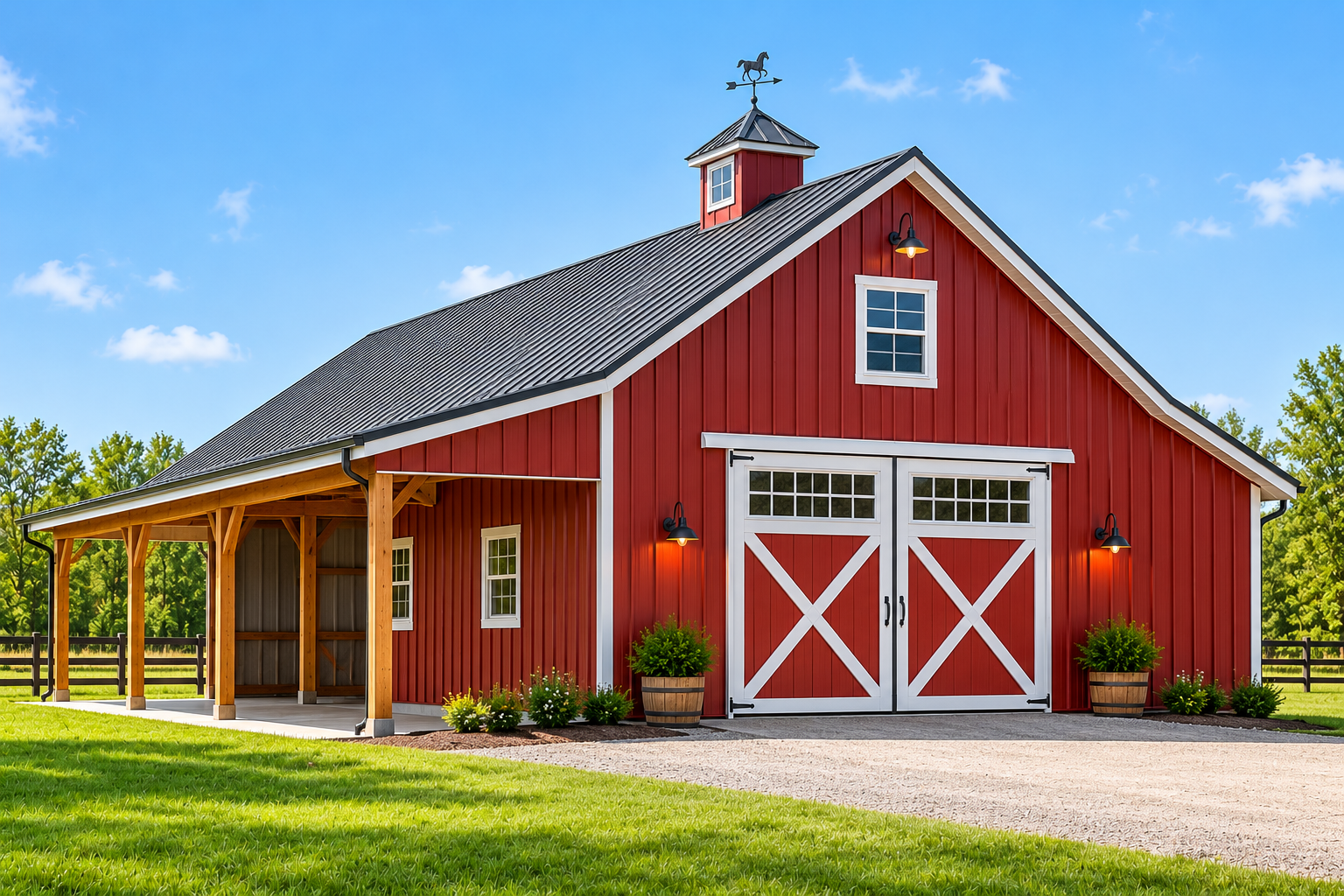
Modern farming requires buildings that are strong, practical, and capable of handling different agricultural needs. Whether farmers need space for livestock, machinery, hay, feed, or other farming supplies, choosing the right barn design can make daily operations easier and more efficient. Traditional wooden barns have been used for generations, but metal barns are becoming a popular alternative because of their durability, flexibility, and relatively low maintenance requirements.
The best metal barn designs offer practical solutions for livestock management, equipment protection, and general agricultural storage. They can also be customized according to farm size, climate, available land, and operational requirements.
At Metal Building Connect, we understand that every agricultural property has different needs. Exploring the right metal barn design can help farmers create a functional space that supports their everyday activities while providing long-term value.
1. Open-Sided Metal Barn Designs for Livestock
Open-sided metal barns are a practical option for farmers who need proper ventilation and easy access for their animals. These structures typically feature a durable metal roof, strong support columns, and partially or completely open sides.
Natural airflow helps reduce heat buildup, making these barns useful for livestock in warmer climates. They also allow farmers to monitor animals easily and move them between feeding and resting areas.
Best suited for:
- Cattle and dairy farming
- Horse shelters
- Sheep and goat housing
- General livestock protection
Farmers can add removable panels, windbreaks, feeding stations, and enclosed sections depending on animal requirements. Proper drainage and suitable flooring are also important for maintaining a clean and comfortable environment.
2. Enclosed Metal Barns for Livestock Protection
Enclosed metal barns provide more protection against rain, strong winds, extreme temperatures, and other outdoor conditions. Unlike open-sided structures, these barns feature metal wall panels and controlled entry points.
They are particularly useful for farmers who need a dedicated environment for livestock during harsh weather or seasonal changes.
A well-planned enclosed barn can include separate animal stalls, feeding areas, storage sections, and maintenance spaces. Windows, ventilation systems, and appropriate insulation can help maintain comfortable indoor conditions.
When designing an enclosed livestock barn, farmers should consider animal movement, available floor space, air circulation, and waste management.
3. Clear-Span Metal Barns for Large Farming Operations
Clear-span metal barns are designed without interior support columns, providing a wide, unobstructed interior space. This design makes it easier to organize agricultural equipment, livestock areas, and other farming activities.
The absence of interior columns allows tractors, trailers, and other machinery to move freely inside the building. It also provides greater flexibility when rearranging storage areas or installing additional equipment.
Key advantages include:
- Open interior layouts
- Easier machinery movement
- Flexible storage arrangements
- Better utilization of available floor space
Clear-span barns are suitable for medium and large agricultural properties where uninterrupted interior space is a priority.
4. Metal Equipment Storage Barns
Agricultural machinery is a significant investment, and leaving expensive equipment exposed to outdoor conditions can increase maintenance costs. Metal equipment storage barns provide a covered and secure space for protecting tractors, harvesters, plows, trailers, and other farming tools.
These barns can be designed with wide entrances, high ceilings, and sufficient interior clearance to accommodate different machinery sizes.
Farmers should consider future equipment purchases when determining the building dimensions. Additional space can also be allocated for spare parts, repair tools, lubricants, and maintenance supplies.
Large sliding doors or overhead doors can make equipment movement more convenient. Proper ventilation and suitable lighting further improve the functionality of the storage space.
5. Combination Metal Barns for Multiple Agricultural Needs
Combination metal barns are among the most versatile options for modern farms. Instead of constructing separate buildings for livestock, machinery, and supplies, farmers can create one structure with multiple dedicated sections.
For example, one section can accommodate cattle, another can store tractors, and a separate area can hold hay, animal feed, and farming equipment.
This arrangement helps organize daily farm activities while making better use of available land.
A successful combination barn design should include:
- Separate livestock and equipment zones
- Appropriate ventilation for animal areas
- Fire-conscious separation for hay and feed storage
- Convenient entrances for machinery
- Easy access to water and feeding facilities
Farmers should also consider local building regulations and professional design requirements before combining different agricultural uses under one roof.
6. Hay and Feed Storage Metal Barns
Keeping hay, grains, and animal feed protected from moisture is essential for maintaining their quality. Metal barns designed specifically for agricultural storage provide shelter from rain, direct sunlight, and other environmental conditions.
These structures can include raised storage platforms, appropriate ventilation, and large access doors for loading and unloading supplies.
Hay storage requires particular attention because damp hay can develop mold and may create a fire hazard through heat buildup. Proper moisture management, ventilation, and safe storage practices are therefore important.
Farmers should also consider separating hay and feed storage from livestock housing and potential ignition sources.
7. Custom Metal Barn Designs for Different Farm Sizes
Not every farm requires a large agricultural building. Small farms may benefit from compact metal barns, while commercial farming operations often need larger structures with multiple functional areas.
Custom metal barn designs allow property owners to select building dimensions, roof styles, door placements, ventilation features, and interior layouts according to their requirements.
Some popular customization options include:
- Vertical roof systems: Designed to help rainwater and snow move off the roof efficiently.
- Sliding doors: Useful for accessing large equipment storage areas.
- Insulated wall panels: Help improve indoor temperature control where appropriate.
- Ventilation systems: Support healthier airflow in livestock areas.
- Skylights and windows: Allow natural light into selected sections.
- Partition walls: Help organize livestock, supplies, and equipment.
Working with an experienced metal building provider can help farmers select a design that balances functionality, durability, and construction costs.
Important Factors to Consider Before Choosing a Metal Barn Design
Selecting the right agricultural barn requires more than choosing an attractive building style. Farmers should evaluate several practical factors before starting construction.
1. Purpose of the Building
First, identify how the barn will be used. A livestock shelter requires different features from a machinery storage building. If the structure will serve multiple purposes, plan separate areas for each activity.
2. Building Size and Layout
Consider the number of animals, dimensions of farming equipment, quantity of stored materials, and available land. Leave enough space for movement, cleaning, maintenance, and future expansion.
3. Local Climate Conditions
Roof design, insulation, ventilation, and structural specifications should reflect local weather conditions. Buildings in areas with heavy snowfall, strong winds, or intense summer heat may require different engineering considerations.
4. Ventilation and Drainage
Livestock barns need appropriate airflow to manage moisture, odors, and heat. Effective drainage also helps prevent water accumulation and maintain cleaner surroundings.
5. Budget and Long-Term Maintenance
Compare construction costs, material quality, installation requirements, and expected maintenance expenses. A lower initial price does not always represent the best long-term investment.
Why Are Metal Barns a Practical Choice for Modern Farming?
Metal barns offer several benefits that make them attractive for agricultural applications. Steel structures can provide excellent strength, design flexibility, and resistance to many common weather-related problems when properly engineered and maintained.
Unlike traditional timber structures, metal buildings are generally less vulnerable to termite damage and do not require routine painting or treatment for wood decay. Their components can also be designed to accommodate different agricultural requirements.
Another important advantage is customization. Farmers can select open-sided shelters, enclosed livestock buildings, equipment storage barns, or combination structures based on their operational needs.
With appropriate protective coatings, quality materials, and professional installation, a metal barn can provide dependable service for many years.
Choosing the Right Metal Barn for Your Farm
The best metal barn design depends on how you plan to use your agricultural property. Open-sided barns work well for livestock shelter, enclosed structures provide additional weather protection, and clear-span buildings offer flexible space for machinery and supplies. Combination barns can bring multiple farming activities together under one roof.
Before making a decision, evaluate your farm’s size, livestock requirements, equipment dimensions, local weather conditions, and long-term plans. A carefully selected design can improve farm organization, protect valuable assets, and support more efficient daily operations.
At Metal Building Connect, exploring the right metal building solutions starts with understanding your agricultural needs. Whether you are planning a livestock shelter, equipment storage facility, or multipurpose farming barn, choosing a suitable metal structure can be a valuable step toward building a more functional and organized farm.
Frequently Asked Questions
1. What is the best metal barn design for livestock?
Open-sided metal barns are popular for livestock because they provide natural ventilation and convenient access. Enclosed barns may be more suitable when additional protection against harsh weather is required.
2. Are metal barns suitable for storing farm equipment?
Yes. Metal barns can be customized with high ceilings, wide doors, and open interior layouts to accommodate tractors, harvesters, trailers, and other agricultural machinery.
3. Can a metal barn be used for livestock and equipment storage?
Yes. Combination metal barns can include separate sections for animals, machinery, feed, and farming supplies, provided the layout addresses ventilation, fire safety, and hygiene requirements.
4. Do metal barns require regular maintenance?
Metal barns generally require less maintenance than many traditional wooden structures. However, periodic inspections of roofing, fasteners, drainage, protective coatings, and structural components are still important.
5. Can metal barns be customized for small farms?
Yes. Metal barns can be designed in different sizes and layouts to suit small farms, large agricultural properties, livestock shelters, and equipment storage requirements.
Recent Blogs
Similar Blogs You May Like
Discover exciting categories. Find what you're looking for.
Modern homeowners are looking for homes that offer durability, functionality, affordability, and flexibility. Traditional construction...
Read more