Choosing the right barn is an important decision for every farm owner. A barn provides...
Read more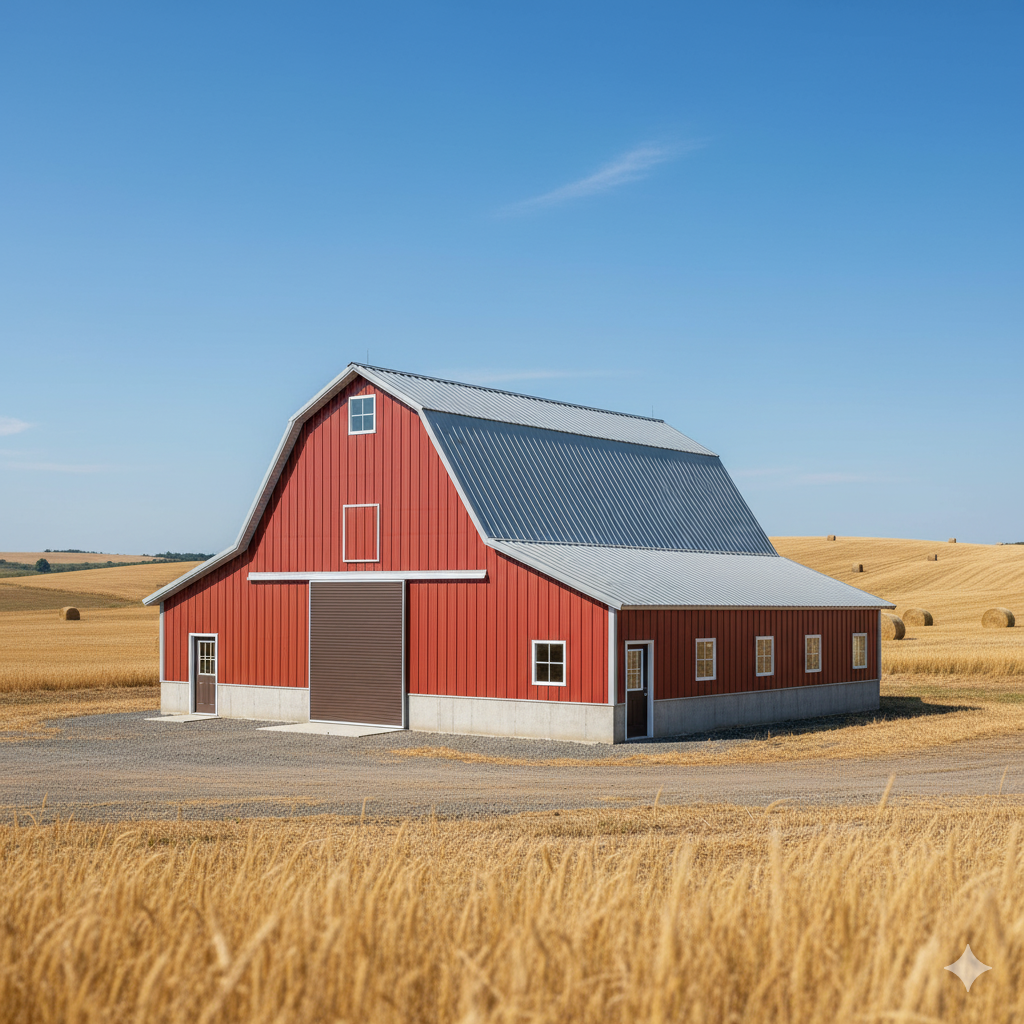
Choosing the right barn is an important decision for every farm owner. A barn provides essential space for storing agricultural equipment, protecting livestock, keeping hay and feed safe, and managing daily farming activities. However, selecting the right construction material can make a significant difference in the building’s durability, maintenance requirements, and long-term cost.
When comparing metal barns vs wooden barns, both options offer different advantages. Wooden barns have a traditional appearance and natural charm, while metal barns are known for their strength, versatility, and relatively low maintenance requirements. The best option depends on your farming needs, available budget, local climate, and how long you plan to use the structure.
In this guide, Metal Building Connect explores the major differences between metal and wooden barns to help farmers make an informed decision.
What Are Metal Barns?
Metal barns are agricultural structures primarily constructed using steel frames and metal roofing or wall panels. They are designed to provide reliable protection for farming equipment, livestock, vehicles, hay, and other agricultural supplies.
Modern metal barns are available in different sizes, layouts, and configurations. Farmers can choose open-sided structures, enclosed storage buildings, livestock shelters, or large agricultural buildings depending on their requirements.
One major advantage of metal barns is their design flexibility. They can include wide entrances, ventilation systems, insulation, sliding doors, and additional storage areas. Prefabricated steel components can also simplify transportation and on-site installation.
What Are Wooden Barns?
Wooden barns are traditional agricultural buildings constructed using timber frames, wooden posts, beams, and wooden siding. They have been used on farms for generations because wood is relatively easy to work with and provides a natural appearance.
Many farmers prefer wooden barns because they complement traditional farm properties and offer a warm, rustic look. Wood also provides natural thermal insulation, which can be beneficial when designing certain agricultural spaces.
However, wooden structures require regular maintenance to protect them from moisture, termites, fungal growth, and weather-related damage. The quality of the timber, construction methods, and protective treatments significantly influence their lifespan.
Metal Barns vs Wooden Barns: Key Differences
Understanding the differences between these two building materials can make your decision easier. Here are the most important factors to consider.
1. Durability and Structural Strength
Durability is one of the first considerations when investing in a farm building.
Metal barns are generally constructed using engineered steel frames designed to support specific structural loads. Properly designed steel buildings can withstand demanding agricultural conditions, including heavy rainfall and strong winds, when built according to local building requirements.
Steel is also resistant to termites and does not rot like untreated wood. However, exposed metal components may develop corrosion if protective coatings are damaged or maintenance is neglected.
Wooden barns can also provide reliable structural performance when built with quality timber and proper engineering. However, prolonged exposure to moisture, insects, and changing weather conditions can gradually weaken wooden components.
Winner: Metal barns for farms looking for durable structures with fewer material-related maintenance concerns.
2. Initial Construction Cost
Budget is another important factor when comparing metal barns and wooden barns.
Wooden barns may sometimes have a lower initial material cost, particularly when locally available timber is used. However, the final construction expense depends on timber quality, labor availability, design complexity, and protective treatments.
Metal barns can involve higher initial material costs depending on steel prices, building dimensions, foundation requirements, and design specifications. However, prefabricated components can help reduce construction time and labor expenses.
Farm owners should compare complete project estimates rather than considering material prices alone.
Winner: It depends on the project. Wooden barns may suit certain smaller budgets, while metal barns can offer better long-term value.
3. Maintenance Requirements
Regular maintenance helps protect agricultural buildings and extend their useful life.
Metal barns generally require less routine maintenance. Owners should inspect the roof, fasteners, joints, drainage systems, protective coatings, and structural connections periodically. Any damaged coating should be repaired to prevent corrosion.
Wooden barns require more frequent attention. Depending on the environment and timber quality, owners may need to repaint, seal, treat, or replace damaged wooden sections. Termite inspections and moisture protection are also important.
For farmers who want to spend less time managing building repairs, metal construction can be a practical choice.
Winner: Metal barns because they generally require less ongoing maintenance.
4. Weather Resistance and Protection
Farm buildings must protect their contents against changing weather conditions.
Metal barns with properly engineered frames, suitable roofing, and secure foundations can provide excellent protection against rain, wind, and other environmental conditions. Galvanized steel and quality protective coatings also help improve resistance to corrosion.
Wooden barns can provide good weather protection when constructed and maintained correctly. However, prolonged moisture exposure can cause swelling, cracking, and decay. Strong winds and heavy rainfall may also damage poorly maintained structures.
In either case, the roof design, drainage, foundation, and construction quality play an important role in overall performance.
Winner: Metal barns for many demanding agricultural applications, provided the structure is properly designed and installed.
5. Fire Safety
Fire safety is particularly important on farms because barns often contain dry hay, straw, animal feed, fuel, machinery, and electrical equipment.
Steel is non-combustible, which means metal framing does not provide additional fuel to a fire. This makes metal barns a useful option when fire resistance is an important construction consideration.
Wood, on the other hand, is combustible and can contribute to the spread of a fire. Wooden structures therefore require appropriate fire prevention measures and careful storage practices.
It is important to understand that a metal barn is not completely fireproof. Its contents, electrical systems, insulation, and other materials can still catch fire.
Winner: Metal barns because steel framing offers an advantage in terms of fire resistance.
6. Construction Time and Installation
Construction time can affect farm operations, particularly when additional storage or livestock space is urgently needed.
Metal barns are often available as prefabricated building systems. Their components are manufactured before arriving at the construction site, which can simplify assembly and reduce on-site fabrication work.
Wooden barns generally involve more cutting, framing, joining, and finishing work. Construction time depends on the design, availability of skilled workers, and weather conditions.
For larger agricultural buildings, prefabricated metal construction can offer a more predictable installation process.
Winner: Metal barns for projects where faster construction is a priority.
7. Customization and Design Flexibility
Every farm has different requirements. Some farmers need space for tractors and machinery, while others require livestock shelters, hay storage, or agricultural workshops.
Metal barns can be customized with different widths, heights, roof styles, door openings, ventilation systems, and insulation options. Clear-span designs can also provide large open interiors without requiring multiple internal support columns.
Wooden barns offer design flexibility as well, especially for traditional layouts, customized interiors, and decorative architectural features.
Both materials can support different agricultural applications, but metal buildings offer practical flexibility for many modern farm requirements.
Winner: Both options can be customized, depending on the building design and construction budget.
Metal Barns vs Wooden Barns: Quick Comparison
| Comparison Factor | Metal Barns | Wooden Barns |
|---|---|---|
| Durability | High | Depends on timber quality and maintenance |
| Initial Cost | Varies by design | Can be lower in some projects |
| Maintenance | Generally low | Generally higher |
| Termite Resistance | Resistant | Requires protection |
| Fire Resistance | Steel is non-combustible | Wood is combustible |
| Construction Time | Often faster | Can take longer |
| Customization | Highly flexible | Highly flexible |
| Moisture Resistance | Depends on coatings and detailing | Requires regular protection |
| Appearance | Modern and practical | Traditional and rustic |
Which Type of Barn Is Better for Different Farming Needs?
The right barn depends on how you intend to use the building.
For agricultural equipment storage: Metal barns are a practical option because they can accommodate tractors, harvesters, trailers, and other large machinery with suitable door openings and interior layouts.
For livestock housing: Both materials can work well. However, proper ventilation, insulation, drainage, flooring, and animal comfort should be prioritized regardless of the construction material.
For hay and feed storage: Metal barns can provide reliable covered storage when designed with adequate ventilation and moisture control. Keeping hay dry is essential for preventing spoilage and reducing fire risks.
For traditional farm properties: Wooden barns may be more suitable when maintaining a classic countryside appearance is an important priority.
For long-term agricultural storage: Metal barns are often a strong choice because of their durability, lower maintenance requirements, and adaptable designs.
Important Factors to Consider Before Choosing a Farm Barn
Before starting construction, consider the following points:
- Purpose: Decide whether the barn will be used for livestock, machinery, hay, feed, or general agricultural storage.
- Available budget: Include material, transportation, foundation, installation, insulation, and future maintenance expenses.
- Local climate: Consider rainfall, humidity, temperature variations, wind exposure, and other environmental conditions.
- Ventilation: Plan sufficient airflow to manage moisture, heat, and air quality, especially in livestock buildings.
- Building regulations: Check local construction requirements, permits, foundation specifications, and structural safety standards.
- Future expansion: Choose a design that can accommodate changing farming operations and additional storage requirements.
Planning these details in advance can help avoid unnecessary construction expenses and improve the long-term usefulness of your barn.
Frequently Asked Questions
1. Are metal barns better than wooden barns?
Metal barns are generally better for farmers who prioritize durability, lower maintenance, termite resistance, and faster installation. Wooden barns may be preferable for those who value traditional aesthetics or have access to affordable quality timber.
2. Do metal barns last longer than wooden barns?
Properly designed and maintained metal barns can have a long service life because steel does not rot or attract termites. Wooden barns can also last for decades, but their longevity depends heavily on timber quality, moisture protection, and regular maintenance.
3. Are metal barns suitable for livestock?
Yes. Metal barns can be used for livestock housing when designed with appropriate ventilation, insulation, drainage, flooring, and sufficient space. Animal comfort and local climate conditions should guide the building design.
4. Are wooden barns cheaper to build?
Wooden barns can sometimes have lower initial material costs, particularly when timber is locally available. However, labor, treatments, repairs, and long-term maintenance should also be included when calculating the overall investment.
5. Can metal barns be customized for different agricultural purposes?
Yes. Metal barns can be designed with different dimensions, roof styles, door configurations, ventilation systems, insulation, and interior layouts to support equipment storage, livestock housing, hay storage, and other farm activities.
Best Solution for Your Farming Requirements
Choosing between metal barns and wooden barns depends on your farming requirements, construction budget, maintenance expectations, and long-term plans. Wooden barns continue to offer traditional appeal and can be suitable for farms where appearance and locally available materials are important.
However, metal barns provide several practical advantages, including durability, resistance to termites, lower maintenance requirements, and flexible construction options. For farmers planning modern agricultural storage facilities or long-term farm infrastructure, metal buildings are worth considering.
At Metal Building Connect, we believe that choosing the right agricultural building starts with understanding your actual needs. Whether you are planning a livestock shelter, equipment storage facility, hay barn, or multipurpose agricultural building, selecting the right design and construction material can help create a functional space that supports your farming operations for years to come.
Recent Blogs
Similar Blogs You May Like
Discover exciting categories. Find what you're looking for.

Modern homeowners are increasingly looking for housing options that combine affordability, durability, flexibility, and attractive...
Read more